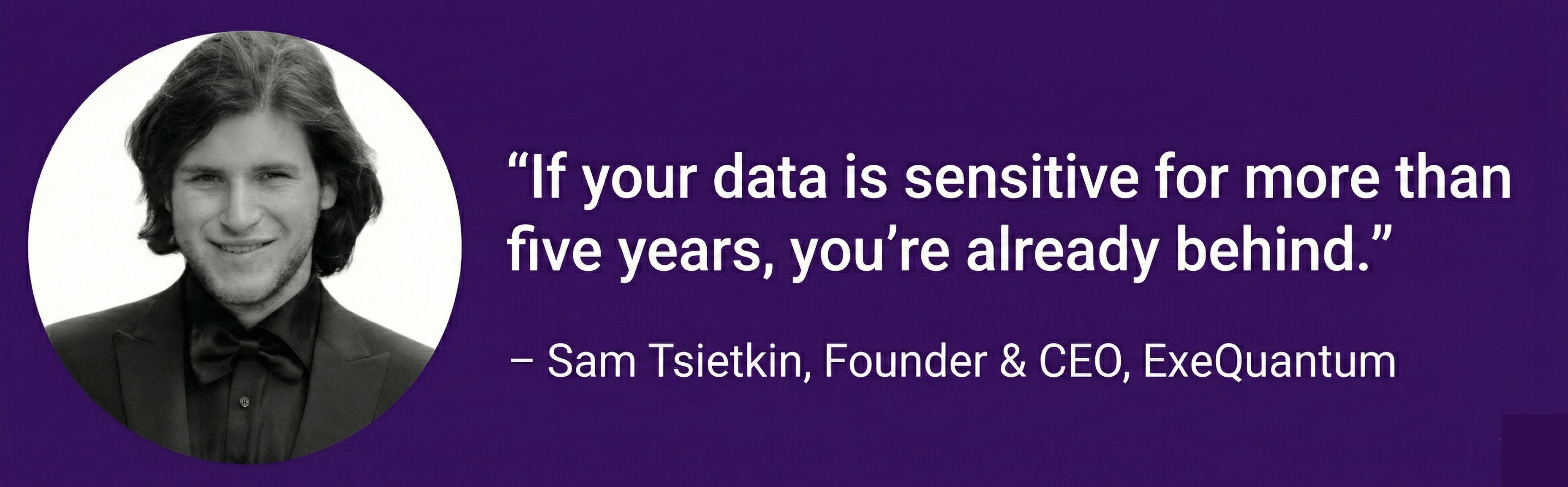
3. You Don’t Need to “Fix Everything” – Start Small and Build Momentum
Executives often stall because the scale feels overwhelming.

Key principles:
- Start with visibility by mapping keys, certificates, algorithms and protocols
- Prioritise by sensitivity and lifespan
- Pilot in controlled environments before going live
- Design for crypto agility instead of one-off upgrades
- Shorten certificate lifecycles
- Treat PQC as a business and GRC risk, not an IT task
4. Hardware Is the Hardest and Often the Most Urgent
Software can be updated. Hardware cannot.
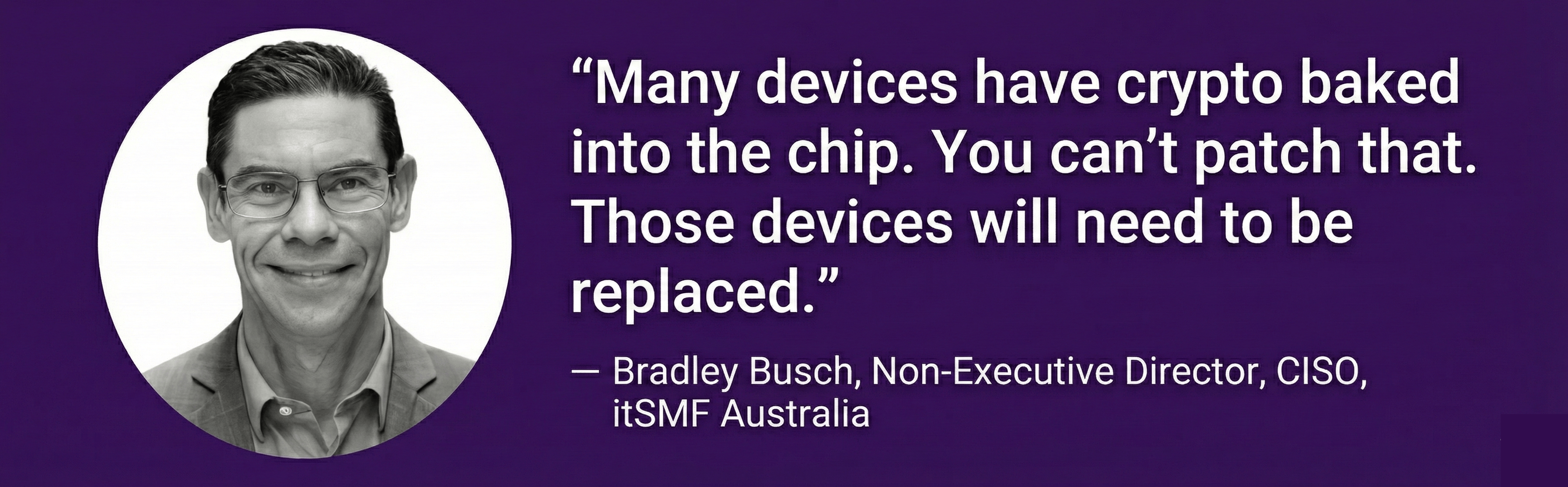
High-risk hardware includes:
- Medical devices
- OT and ICS systems
- Telco infrastructure
- Network appliances
- Legacy laptops and desktops
- Consumer devices with embedded crypto
This will drive a global hardware modernisation wave, and organisations with slow refresh cycles are the most exposed.
5. AI and Quantum Will Converge and the Threat Landscape Will Shift
The panel explored the dual-use realities of AI and quantum.
How AI strengthens defenders:
- Automated C-BOM generation
- PQC testing
- Crypto-agile orchestration
- Faster cryptographic modelling
How AI strengthens adversaries:
- Accelerated cryptanalysis
- Differential attack generation
- Pattern finding against symmetric encryption
- Industrialised social engineering
Quantum will also enhance AI by enabling faster training, optimisation and pattern detection.

6. Skills, Budgets and Vendors: What Leadership Needs to Know
The skills gap came up repeatedly, but it should not halt progress.

And a crucial reminder:

7. Biometrics, QKD and the Future of Identity
Audience questions highlighted growing interest in next-generation identity.
Biometrics
Useful but increasingly spoofable due to deepfakes.
The future lies in biometrics tied to PQC-backed digital signatures.
Quantum Key Distribution (QKD)
Promising for niche, high-assurance use cases but limited by distance, specialised hardware and the need for PQC to authenticate.

8. What Organisations Must Do Now
The panel aligned on a clear, practical roadmap:
- Begin cryptographic discovery with a C-BOM and inventory
- Update procurement requirements to include PQC and crypto agility
- Modernise legacy hardware with long refresh cycles
- Build a crypto-agile architecture
- Engage boards early and frame this as a resilience priority
- Run small pilots
- Align to global standards including NIST, ACSC, NSA CNSA 2.0, ENISA and ISO 23837
- Plan budgets now as transitions typically take 2 to 5 years
9. The Takeaway: Quantum Security Is Now a Leadership Responsibility
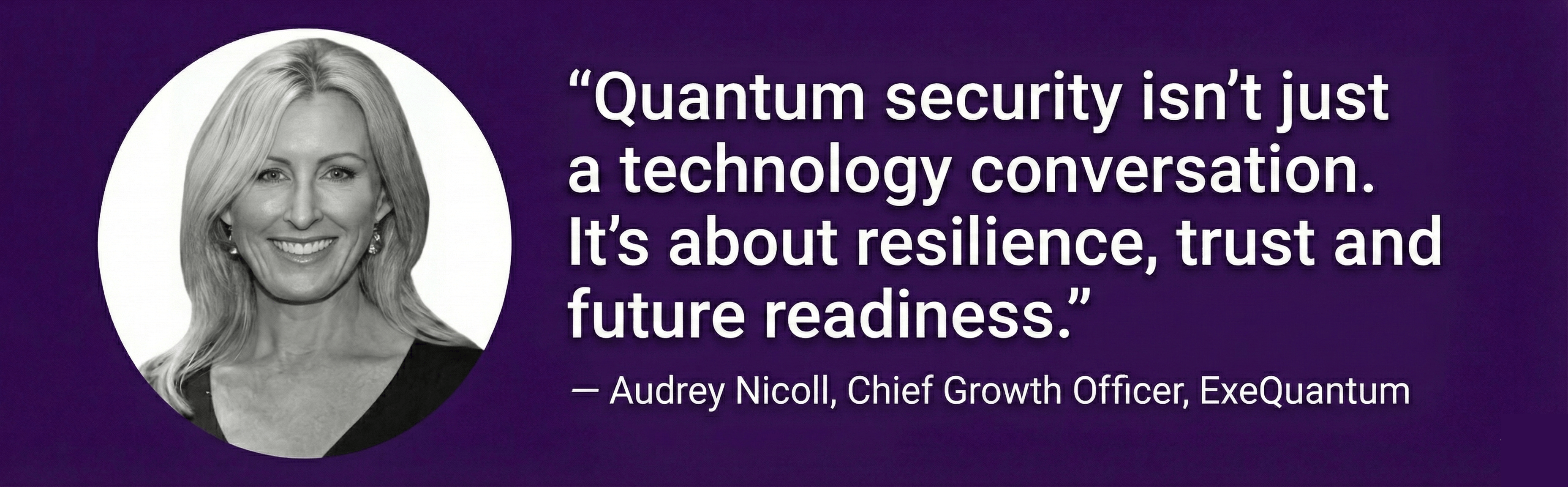
Quantum transformation will impact every sector from hospitals and banks to education and manufacturing.
Leaders who invest early will reduce risk, modernise faster and meet the regulatory requirements already emerging across the United States, European Union, United Kingdom, Singapore and Australia.
Organisations that start now will be the ones ready for what comes next.
Be audit-ready for the post-quantum era.
Instant download: executive playbook for leaders.